How to Clean and Sanitize Your Grooming Tools at Home (And Why It Matters)
You wash your face, you launder your towels, and you scrub your bathroom sink. But when was the last time you properly sanitized your nail clippers, tweezers, or grooming scissors?
For most people, the answer is "rarely" or "never." We tend to throw our tools back into a drawer or travel bag the moment we finish using them. However, neglecting your grooming kit doesn't just shorten the lifespan of your tools—it can actively harm your skin and nail health.
Here is everything you need to know about why sanitizing your tools is non-negotiable, and exactly how to do it at home in under ten minutes.
Why You Need to Sanitize Your Nail Clippers and Tweezers
If you are using premium tools, a quick wipe with a tissue isn't enough. Here is why a proper cleaning routine is essential:
1. The Hidden Bacteria on Your Skin
Every time you use a cuticle pusher, nail clipper, or pair of tweezers, the metal comes into direct contact with dead skin cells, natural oils, and microscopic bacteria. If you accidentally nick a cuticle or pull an ingrown hair, those unwashed tools can introduce bacteria directly into the open micro-wound, leading to painful redness, swelling, or infection.
2. Preventing Cross-Contamination
If you share your grooming kit with a partner or family member, sanitizing becomes even more critical. Fungal infections (like athlete's foot or nail fungus) are highly contagious and can easily spread from person to person through shared, unwashed clippers.
3. Protecting the Blade and Metal
Skin oils and moisture are the natural enemies of cheap metal. Leaving debris on standard drugstore clippers accelerates rust and degrades the cutting edge, leaving you with dull blades that crush the nail instead of cutting it. While premium high-carbon stainless steel is highly rust-resistant, keeping the blades clean ensures they maintain their master-level precision for years to come.
Step-by-Step: How to Clean Your Grooming Kit at Home
You do not need a surgical autoclave to keep your kit pristine. A simple monthly routine is all it takes.
Step 1: Wash Away the Debris
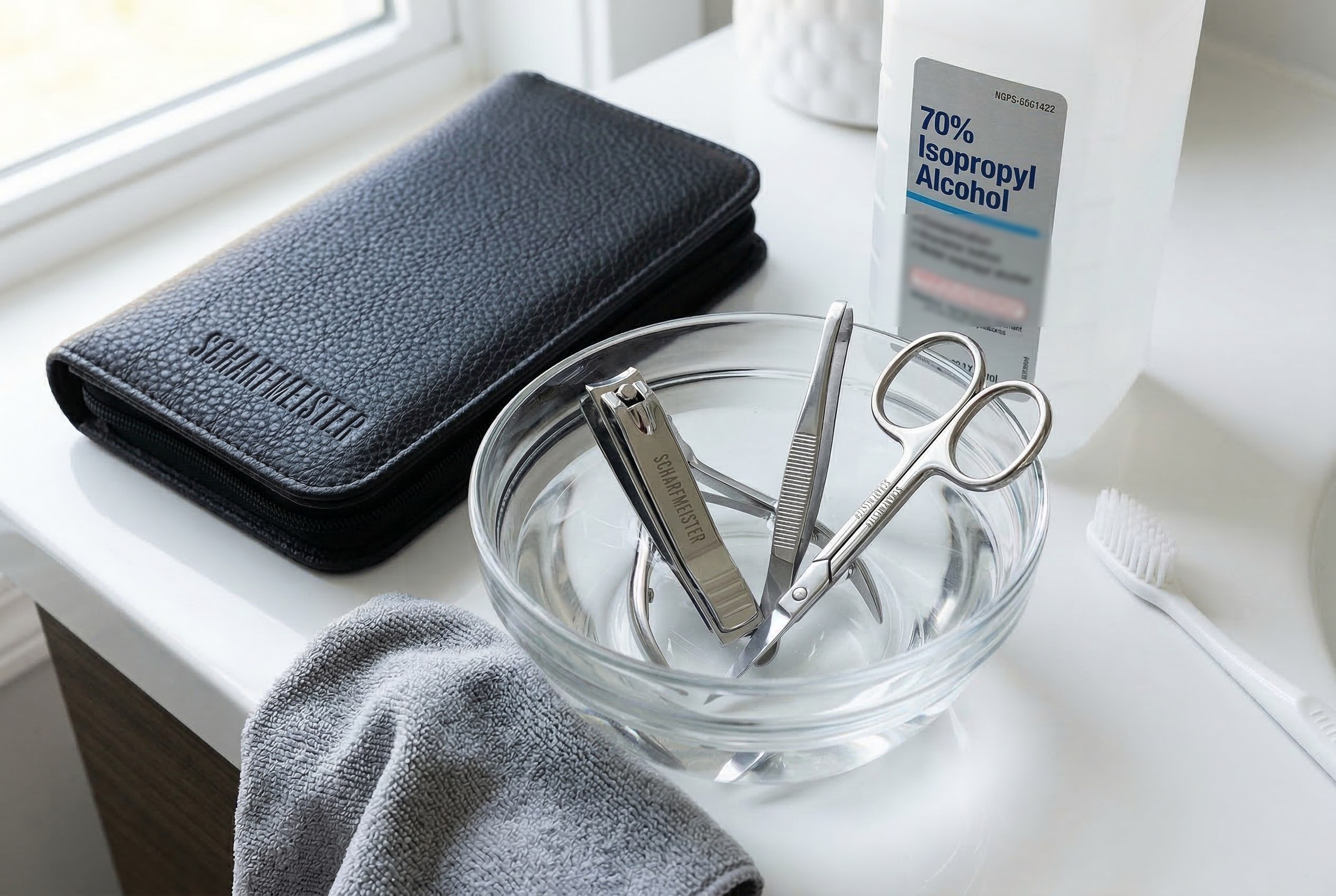
Start by washing your stainless steel tools with warm water and antibacterial dish soap. Use an old, clean toothbrush to gently scrub the cutting edges, the textured grips, and the pivot points of your clippers and scissors. This removes physical debris and breaks down skin oils.
Step 2: The Alcohol Soak
Once the physical grime is gone, it is time to kill the invisible bacteria. Pour a shallow layer of 70% or 90% isopropyl alcohol (rubbing alcohol) into a clean bowl. Submerge the metal cutting ends of your tools in the alcohol for 5 to 10 minutes.
Step 3: Dry Completely
This is the most crucial step. Remove the tools from the alcohol and dry them entirely with a clean microfiber cloth or paper towel. Never put damp tools back into a dark, enclosed case. Ensure no moisture remains trapped in the hinges of your scissors or clippers.
How to Care for Your Engineered Leather Case
Do not forget the home your tools live in. If your tools are stored in a premium engineered leather folio, simply wipe the exterior and the soft-touch interior with a lightly damp cloth to remove any stray dust or nail clippings. Leave it open to air dry completely before zipping your clean tools back inside.
Invest in Tools Worth Taking Care Of: The Scharfmeister Pro Series
A good cleaning routine can't save cheap, easily rusted metal. If you are constantly replacing dull, tarnished clippers, it is time to upgrade your regimen.
The Scharfmeister Pro Series is crafted from professional-grade, high-carbon stainless steel designed to resist corrosion and maintain a flawlessly sharp edge. Housed in a comprehensive engineered leather zipfolio, this set provides everything you need for meticulous, hygienic grooming at home.
Stop settling for disposable tools. Invest in professional precision.